Richard Cavendish
The Black-Eyed BlondeRichard Cavendish is Clare Cavendish’s husband, a polo player whose easy command of leisure and social performance contrasts with his distance from the people around him. He treats Clare’s marriage as an arrangement, and his habitual drinking and indifference become unmistakable in the final scene, when he steps over Terry Lennox’s body, touches Clare’s head, and wanders away.
Identity and Household
Richard enters the story through Clare’s account of their marriage: she says that they have an arrangement, and describes his preference for polo ponies and cocktail waitresses. The phrasing presents their relationship not as an intimate partnership but as a settled, mutually recognized condition. Later, Clare calls it an understanding, suggesting that the word matters less than the practical distance it names.
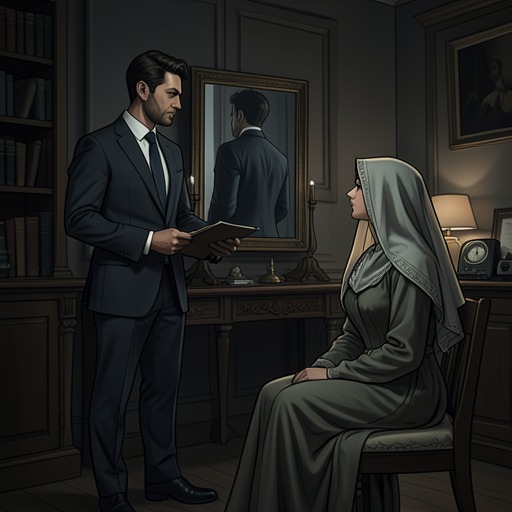
That distance has a physical counterpart in the household. Clare tells Philip Marlowe that she and Richard occupy one wing of the large house, while her mother has another to herself. The arrangement establishes separate space within a shared home. Richard’s presence does not imply close involvement in Clare’s daily life: when Marlowe asks what would happen if Richard returned and found Clare’s brother, Everett Edwards III, incapacitated, Clare expects that Richard would laugh and go to bed. She says he pays little attention to what happens between her and her brother.
Richard is associated with the leisure and display of the Cavendish world. When Marlowe first meets him, he wears cream jodhpurs, calfskin boots, a bright shirt, and a yellow silk cravat. He is well-built, broad-shouldered, and slightly bowlegged; Marlowe also notices that he is an inch or two shorter than Clare. The polished riding clothes establish him as another sporting figure in a household where games and privilege seem to organize daily life.
First Encounter and Social Performance
Richard makes his entrance by taking the iced tea before Clare can offer it, drinking it at once, and only then turning his attention to the visitor. His manner is relaxed enough to seem effortless, but his greeting to Marlowe carries a mixture of indifference and disdain. He examines the detective’s name as though it were of little worth, then makes a lightly mocking remark about Marlowe’s hat. The exchange turns a routine introduction into a small contest over status and attention.
When Richard asks what kind of business Marlowe is in, Clare answers that Marlowe finds things. Richard presses for an explanation, while Clare’s intervention has already made clear that she is managing the introduction. The brief encounter presents a triangle of social unease: Clare’s attention is divided, Marlowe refuses to play along with Richard’s hospitality, and Richard appears comfortable treating the visitor as an object of amusement. His composure is not proof of authority so much as a performance of not needing to notice anyone else.
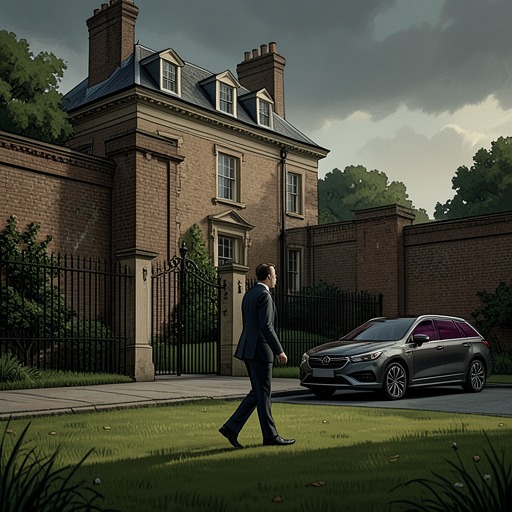
That performance recurs when Marlowe leaves the house. Richard is walking a large chestnut stallion up the drive, his hair and riding clothes still neat, while the horse appears agitated. He greets Marlowe familiarly and smiles broadly, but the detective reads the smile as empty. Richard’s carefully maintained appearance, set against the horse’s visible agitation, again places him on the side of ease and control without establishing what he is thinking.
Marriage and Emotional Distance
Clare’s account of the marriage gives Richard’s social manner a domestic context. She expects him to be elsewhere with other women, and she describes their arrangement as something already understood between them. The evidence does not depict the couple negotiating a change or seeking reconciliation; instead, their language and habits suggest that each has room to live apart within the marriage.
Clare also says that Richard takes little notice of her relationship with Everett Edwards III. That indifference is distinct from active hostility: she anticipates that he would laugh at the situation and go to bed. Richard’s detachment leaves Clare to manage her brother’s condition and the practical risks surrounding him. His marriage therefore functions as a shelter of space and social standing without offering her dependable emotional or familial support.
Marlowe’s own interpretation of Clare’s position reinforces the contrast, though it remains his judgment rather than a fact about Richard’s inner life. He regards Clare as wealthy and socially far beyond him, and understands that she is married to a polo player. The marriage is part of the privilege that separates Clare’s world from Marlowe’s, but Richard’s later behavior shows that status does not translate into attentiveness or responsibility within the household.
Drinking and Recurrent Absence
Richard’s drinking is not confined to the last night. Clare tells Marlowe that Richard has come home very drunk and will sleep for hours, remembering nothing in the morning, and that this happens often. On that occasion, he is sprawled on a sofa, unresponsive enough that Marlowe initially fails to register him as a person in the room. Clare offers a wry explanation for his presence: he is drawn by the sound of the piano even though he claims to dislike music.
When Richard briefly sits up and asks what is happening, Terry Lennox tells him that everything is all right and that he should go back to sleep. Richard accepts this without pressing for an explanation and lies down again. The moment makes his disconnection visible in action: even when awakened in a room where a tense conversation is underway, he does not investigate or take responsibility for what is happening around him.
His mother-in-law, Dorothea Langrishe, responds to the scene with indulgence. She sees Richard asleep and jokes about his drinking, treating him as a familiar, troublesome figure rather than as a source of immediate alarm. Her response gives his behavior a household setting: his drunkenness is established enough to be incorporated into the family’s banter, even as Clare has to account for its practical consequences.
The Final Scene and Narrative Role
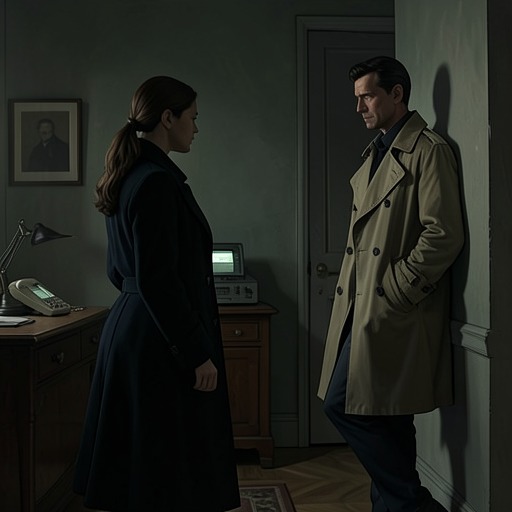
Richard’s final appearance comes after Everett Edwards III shoots Terry Lennox. Richard gets up and sees Terry and Clare, but the scene seems not to register as real to him. He laughs, calls the situation a man down, steps over Terry’s body, pats Clare on the head, and wanders out humming. The gesture toward Clare is both intimate and startlingly inadequate: he touches her, yet offers no meaningful recognition of her shock or of what has happened.
Marlowe supposes that Richard believes he is dreaming, but the narration presents this as the detective’s interpretation, not as a confirmed explanation. His behavior can be read alongside Clare’s earlier description of his repeated drunken episodes, though the text does not specify his condition at that exact moment. What is certain is the consequence: Richard leaves, and Clare begins to cry. Marlowe considers going to her but recognizes that he can no longer alter the situation.
Richard does not resolve the central conflicts or provide an account of the violence. Instead, his departure sharpens the ending’s contrast between the social ease he has maintained and the irreversible event unfolding in his home. His marriage to Clare has been marked by distance, his habitual absence has been treated as ordinary, and at the decisive moment his response again fails to meet what the scene demands. The novel leaves his later fate unspecified; his final action is not a reckoning, but an exit that leaves Clare with the loss.